
Mallorca Planer · Independent travel guide
Planning a Mallorca holiday: six steps to a finished trip
A Mallorca holiday is quick to book and still easy to plan badly, because the island is bigger than many people expect. This order saves detours: first the month, then the region, then everything else.
Photo: Olaf Tausch, CC BY 3.0, Wikimedia Commons
Updated on 2/10/2026
In short
The best way to plan a Mallorca holiday is in this order: first the month, then the region, then the length of stay. June to September suits the beach, while April, May and October suit hiking and sightseeing. A week is enough for one region and two or three day trips. The airport is eight kilometres east of Palma. For summer, book car hire and accommodation early.
Key points
- Mallorca, also spelled Majorca in English, covers about 3,600 square kilometres and measures 98 kilometres east to west and 78 kilometres north to south.
- The airport is eight kilometres east of Palma, and TIB airport buses run directly to several resorts.
- Trains link Palma with Inca, Sa Pobla and Manacor, and a separate railway has run to Sóller since 1912.
- According to AEMET, July is the driest month in Palma with 6 mm and October the wettest with 69 mm.
- The tourist tax is 1 to 4 euros per person per day in high season, depending on the accommodation.
Step 1: choose the month
The month decides what works well in Mallorca. The AEMET climate normals for Palma give a clear picture: in July and August mean daily highs are 29.4 and 29.8 °C and there is hardly any rain. In April and May they are 19.2 and 22.5 °C, and in October 23.7 °C with 69 mm of rain.
That gives a simple rule. If you want to swim, go from June to September. If you want to hike, cycle or do a lot of sightseeing, choose April, May or October. All twelve months are compared under best time to visit.
Step 2: choose the region
Mallorca has 53 municipalities and very different corners. The region shapes your days more than the hotel does.
- Palma: a city with an old town, a cathedral and a port. Good for short trips and for anyone without a hire car.
- Serra de Tramuntana: the mountain range in the north-west, a UNESCO World Heritage Site since 2011. Villages such as Valldemossa, Deià and Sóller, plenty of hiking, little sandy beach.
- North: the bays of Alcúdia and Pollença with long sandy beaches. Platja de Muro is 5.2 kilometres long.
- East coast: coves and resorts such as Cala Millor and Cala d'Or, plus the caves near Porto Cristo.
- South: flat country, the natural beach of Es Trenc and the harbour of Colònia de Sant Jordi.
- South-west: the municipality of Calvià with Magaluf, Palmanova and Santa Ponça, and Andratx with its port.
If you want the countryside, see finca holidays in Mallorca.
Step 3: decide how long
At about 3,600 square kilometres and 98 kilometres from east to west, the island is too big to see casually from one base. Plan by length of stay:
- Three to four days: one base, ideally Palma, and two day trips. The schedule is under short break.
- One week: one region in depth, plus two or three day trips to other parts of the island.
- Two weeks: two bases, for example mountains or city first, then beach.
Step 4: getting there and getting around
Palma de Mallorca Airport is eight kilometres east of the city, next to Can Pastilla. If you arrive by sea you land at the port of Palma, which is served by ferries from the Spanish mainland and the neighbouring islands. A second ferry port is in Alcúdia.
From the airport, buses of the public TIB network run directly to resorts without a change in Palma:
- A11 via Palmanova, Magaluf and Santa Ponça to Peguera and Camp de Mar
- A32 via Inca, Alcúdia and Platja de Muro to Can Picafort, summer only according to TIB
- A33 via Inca to Alcúdia and Port d'Alcúdia
- A42 via Manacor and Porto Cristo to Cala Millor and Cala Bona, summer only according to TIB
- A43 to Manacor
- A51 via S'Arenal and Llucmajor to Campos
Timetables and fares are on the TIB website. Trains of the island railway run from Palma to Inca and on to Sa Pobla or Manacor. A separate historic railway has run to Sóller since 1912 from Plaça d'Espanya. For remote coves and mountain roads, car hire remains the most flexible option.
Step 5: what to book in advance
- Accommodation: early for July and August. For holiday homes the tourist registration number belongs in the advert. More under where to stay.
- Car hire: also early in summer, especially for families who need a child seat.
- Activities with fixed times: boat trips, cave visits and guided tours are tied to set departures. A selection by theme is under day trips and activities.
Beach days, villages and markets need no reservation. Leave at least one day free in every plan.
Step 6: allow for the tourist tax
The Balearic Islands charge a tax on tourist stays. Law 2/2016 sets it per person per day, graded by type of accommodation. From 1 November to 30 April it is reduced by 75 per cent. From the ninth day in the same accommodation it drops by a further 50 per cent. Children and teenagers under 16 are exempt. Rural hotels, agroturismos, hospederías and turismo de interior accommodation that have opted for a star classification are taxed according to their star category.
| Type of accommodation | Euros per day |
|---|---|
| Hotels, city hotels and aparthotels with five stars, five stars grand luxe and four stars superior | 4 |
| Hotels, city hotels and aparthotels with four stars and three stars superior | 3 |
| Hotels, city hotels and aparthotels with one to three stars | 2 |
| Tourist apartments with four keys and four keys superior | 4 |
| Tourist apartments with three keys superior | 3 |
| Tourist apartments with one to three keys | 2 |
| Non-residential accommodation of empresas turístico-residenciales | 4 |
| Holiday homes and flats let to tourists | 2 |
| Rural hotels, agroturismos, hospederías and accommodation in the turismo de interior category | 2 |
| Hostales, pensions, guesthouses and campsites | 1 |
| Hostels (albergues) and mountain refuges | 1 |
| Other tourist establishments or dwellings | 2 |
| Cruise ships | 2 |
Source: Ley 2/2016 del impuesto sobre estancias turísticas en las Illes Balears, texto consolidado (BOE), checked on 2/10/2026.
Frequently asked questions
How many days do you need for a Mallorca holiday?
For a first Mallorca holiday a week is a good frame: one region in depth and two or three day trips. Three to four days are enough for Palma and two day trips. With two weeks you can combine two bases, such as mountains and beach.
Do you need a hire car in Mallorca?
Not everywhere. You can manage without a car in Palma, and TIB airport buses run directly to places such as Alcúdia, Magaluf or Campos. Line A42 to Cala Millor runs in summer only, according to TIB. Trains link Palma with Inca, Sa Pobla and Manacor. For remote coves, mountain roads and fincas, car hire is the most flexible option.
Which region of Mallorca is best for a first holiday?
It depends on what you want most. Palma suits city life and short distances, the north near Alcúdia suits long sandy beaches, the east coast suits coves and the Serra de Tramuntana suits villages and hiking. For a first visit, one region with day trips is better than moving often.
When should you book a Mallorca holiday?
For July and August it pays to book accommodation and car hire early. For April, May and October there is more leeway. Activities with fixed departures, such as boat trips, are best reserved once your travel dates are set.
How much is the tourist tax in Mallorca?
Under Balearic Law 2/2016 the tax is 1 to 4 euros per person per day, depending on the accommodation. From 1 November to 30 April it is reduced by 75 per cent, and from the ninth day by a further 50 per cent. No tax is due for anyone under 16.
How do you get from Palma de Mallorca airport to your resort?
The airport is eight kilometres east of Palma. TIB lines A11, A32, A33, A42, A43 and A51 run directly from there to places including Peguera, Can Picafort, Port d'Alcúdia, Cala Millor, Manacor and Campos. According to TIB, A32 and A42 run in summer only. Timetables are on the TIB website.
Is a Mallorca holiday worth it in winter?
For city days, hiking and quiet, yes. For a beach holiday, no. According to AEMET, Palma reaches a mean 15.4 °C by day and 8.3 °C at night in January, with 42 mm of rain. The reduced tourist tax also applies from November to April.
Sources
- AEMET, Valores climatológicos normales: Palma, Puerto (1981-2010), checked on 2/10/2026
- Ley 2/2016 del impuesto sobre estancias turísticas en las Illes Balears, texto consolidado (BOE), checked on 2/10/2026
- TIB, Transports de les Illes Balears: líneas y horarios de autobús, checked on 2/10/2026
- Wikipedia (de): Mallorca, checked on 2/10/2026
- Wikipedia (en): Mallorca, checked on 2/10/2026
- Wikipedia (en): Palma de Mallorca Airport, checked on 2/10/2026
- Wikipedia (de): Hafen von Palma, checked on 2/10/2026
- Wikipedia (de): Serveis Ferroviaris de Mallorca, checked on 2/10/2026
- Wikipedia (de): Ferrocarril de Sóller, checked on 2/10/2026
- Viquipèdia (ca): Platja de Muro, checked on 2/10/2026
- Wikipedia (en): Magaluf, checked on 2/10/2026
Written and maintained by the Mallorca Planer editorial team. Independent travel guide, not an official body and not a travel agency.
Bookable
Activities that fit
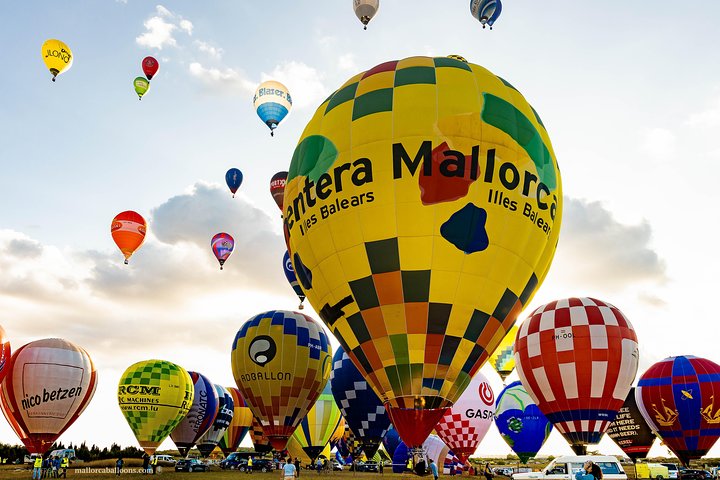
Romantic Sunrise Balloon Tour in Majorca
4 hfrom188 €
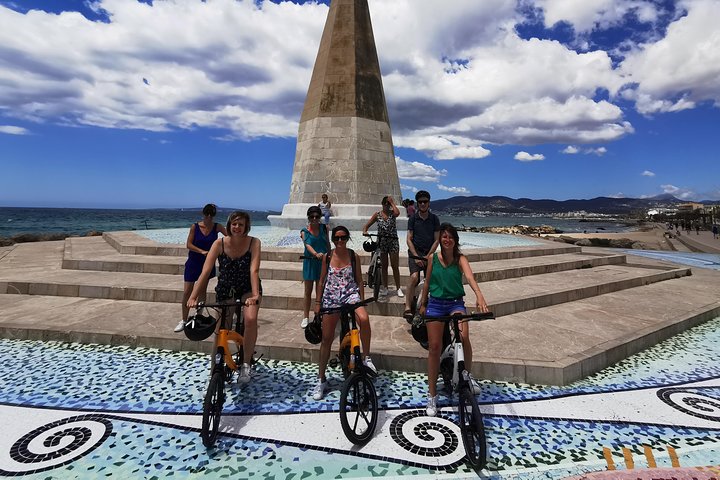
3 Hours E-Bike Tour in Palma
3 hfrom70 €
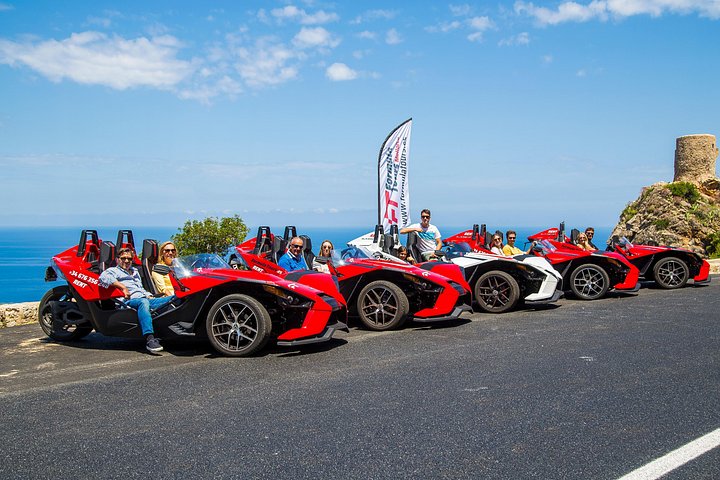
Explore Mallorca in Your Own Formula One Car
4 hfrom59 €
Prices are indicative from prices set by each provider. Booking happens on Viator. We earn a commission on bookings made through these links and the price for you stays the same.
Plan
Read next
Best time to visitMallorca works in every month of the year, but not every month suits every plan. The climate normals published for PalmaShort breakA short break in Mallorca works if you do not try to see the whole island. With Palma as a base and one clear theme per Where to stayIn Mallorca the region shapes your holiday more than the stars on the hotel. Pick the area that fits your plan first, thActivitiesHere you will find bookable day trips and activities in Mallorca, sorted by theme and region. That way you can quickly sMapThe map shows where the main towns, beaches and sights in Mallorca are. The text below explains how the island is laid oFinca holidaysA finca in Mallorca means a holiday in the countryside, away from the hotel zones. Before you book, three things are wor