.jpg)
Mallorca Planer · Independent travel guide
The main sights in Mallorca, sorted by region
Mallorca, still spelled Majorca in some English guides, has far more to show than beaches. This overview sorts the main sights by region so you can plan one corner of the island per day.
Photo: Thomas Wolf, www.foto-tw.de, CC BY-SA 3.0 de, Wikimedia Commons
Updated on 2/10/2026
In short
The main things to see in Mallorca are La Seu cathedral and Bellver Castle in Palma, the Serra de Tramuntana with Valldemossa, Sóller and the Lluc sanctuary, Cap de Formentor in the north, the walled old town of Alcúdia and the Caves of Drach near Porto Cristo. The Tramuntana has been a UNESCO World Heritage Site since 2011.
Key points
- La Seu cathedral in Palma: begun from 1229/1230, nave 44 metres high, with a large rose window.
- The Serra de Tramuntana has been a UNESCO World Heritage cultural landscape since 27 June 2011. Its highest peak is Puig Major at 1,436 metres.
- The historic Palma to Sóller train has run since 1912 over about 27 kilometres and through 13 tunnels.
- The road to Sa Calobra is about 13 kilometres long and covers 682 metres of height difference.
- The Caves of Drach near Porto Cristo were explored in 1896 by Édouard-Alfred Martel, and the lake carries his name.
Palma: cathedral, Almudaina and Bellver
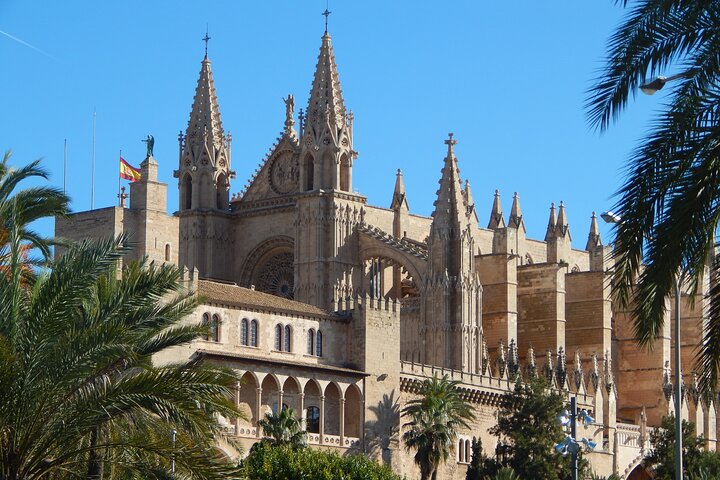
La Seu cathedral stands right on the seafront against the old city wall of Palma. Building began from 1229/1230, shortly after the conquest of the city. The bell tower was finished in 1498 and the main portal was consecrated in 1601. The nave is 44 metres high and there is a large rose window.
Next door is the Royal Palace of La Almudaina. It stands on the site of an Arab fortress, was built between 1305 and 1314 for King James II according to Patrimonio Nacional, and is now the official residence of the King of Spain during his visits to Mallorca. About 3 kilometres west of the centre, Bellver Castle sits 112.6 metres above sea level. It was built from 1300 for King James II, has a circular plan and houses the city history museum.
Serra de Tramuntana: World Heritage, Valldemossa and Lluc
The Serra de Tramuntana runs for more than 90 kilometres along the north-west coast. UNESCO added it to the World Heritage List as a cultural landscape on 27 June 2011. The highest peak is Puig Major at 1,436 metres, and its summit is a restricted military zone.
- Valldemossa Charterhouse: the complex began as a royal palace, passed to the Carthusian order in 1399 and the monks stayed until 1835. Frédéric Chopin and George Sand spent the winter of 1838 to 1839 here.
- Lluc sanctuary: the pilgrimage site is seen as the spiritual centre of the island. Its first chapel dates from 1230. Lluc lies on the GR 221 long-distance trail.
- Villages: Deià, Fornalutx and Banyalbufar are covered in the guide to towns and villages.
Sóller: the 1912 train and the tram to the port
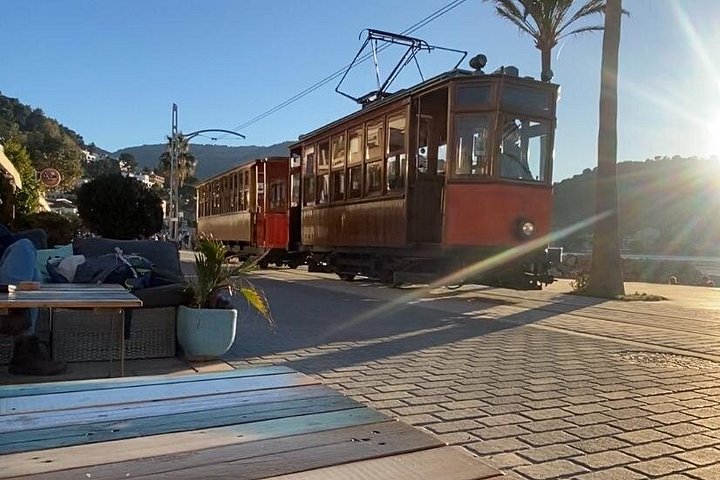
The railway from Palma to Sóller opened in April 1912. It is about 27 kilometres long, narrow gauge, and passes through 13 tunnels under the Serra de Tramuntana. From Sóller a tram has run to Port de Sóller since 4 October 1913, on a line 4.868 kilometres long. Both are operated by the company Ferrocarril de Sóller. Fares and timetables are published by the operator on its website, and no prices are quoted here.
Sa Calobra and Cap de Formentor: roads as the destination
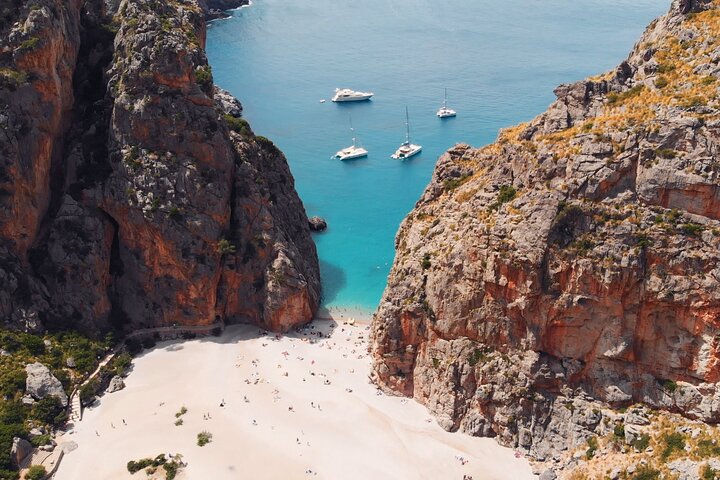
Only one road leads to Sa Calobra, the Ma-2141. It is about 13 kilometres long, covers 682 metres of height difference and was designed by the engineer Antonio Parietti. From the car park or the boat jetty, a 600-metre footpath leads to the mouth of the Torrent de Pareis gorge. If you would rather not drive, you can arrive by sea, see boat trips.
Cap de Formentor is the northernmost point of Mallorca. The 13.5-kilometre road from Port de Pollença is also by Parietti. The highest point of the peninsula, Fumat, is 384 metres above the sea. There is more on the area in the guide to Alcúdia and Pollença.
Alcúdia and the north-east: walls, castle and caves
Alcúdia was founded as a new town in 1298 and the medieval wall around the old town was finished in 1362. The municipality also holds the remains of the Roman city of Pollentia, the most important Roman site in Mallorca. In Capdepera, a fortified village from the 14th century stands on the 159-metre Puig de Capdepera and has been a protected monument since 1993. The Caves of Artà are, despite the name, in the municipality of Capdepera, east of Canyamel, and their exit opens about 50 metres above the sea.
East coast and south: Caves of Drach and Cabrera
The Caves of Drach are near Porto Cristo in the municipality of Manacor on the east coast. They are four connected caves, first mentioned in a letter dated 1338. In 1896 the French speleologist Édouard-Alfred Martel explored the system, and the underground lake is named Lake Martel after him. The visit usually ends with a short classical music concert played from boats.
Off the south coast lies the Cabrera archipelago, 19 islands and islets according to Wikipedia, ten kilometres off Cap de ses Salines, the southern tip of Mallorca. It has been a national park since 1991. A visitor centre has been open in Colònia de Sant Jordi since 2008. More in the guide to the south.
How to combine the sights
Plan by region, not by ranking. Straight-line distances from Palma, calculated from coordinates, show why: Valldemossa is about 16 kilometres away, Sóller 22, Alcúdia 51, Porto Cristo 59 and Cap de Formentor 65. By road each one is longer.
- A day in Palma: cathedral, Almudaina and Bellver.
- A day in the north-west: Valldemossa, Deià and Sóller.
- A day in the north: Alcúdia, Pollença and Formentor.
- A day in the east: the caves near Porto Cristo, plus Artà or Capdepera.
Entrance fees and opening hours change. Check them on the website of each sight before you go. The map of Mallorca shows where everything is.
| Sight | Region | Key figure according to Wikipedia |
|---|---|---|
| La Seu cathedral | Palma | Nave 44 metres high, begun from 1229/1230 |
| Bellver Castle | Palma | Circular castle, built from 1300, 112.6 metres above sea level |
| Valldemossa Charterhouse | Serra de Tramuntana | Carthusians from 1399 to 1835 |
| Palma to Sóller train | Serra de Tramuntana | Opened 1912, about 27 kilometres, 13 tunnels |
| Road to Sa Calobra | Serra de Tramuntana | about 13 kilometres, 682 metres of height difference |
| Cap de Formentor | North | Northernmost point, 13.5-kilometre road from Port de Pollença |
| Alcúdia town wall | North | Town founded 1298, wall finished 1362 |
| Capdepera Castle | North-east | 14th century, at 159 metres |
| Caves of Drach | East coast | Explored in 1896 by Martel |
| Cabrera | South | National park since 1991, 19 islands and islets according to Wikipedia |
Source: Wikipedia (de): Mallorca, checked on 2/10/2026.
Frequently asked questions
What are the main things to see in Mallorca?
The most often named are La Seu cathedral and Bellver Castle in Palma, the Valldemossa Charterhouse, the historic train to Sóller, the Lluc sanctuary, Cap de Formentor, the old town of Alcúdia and the Caves of Drach near Porto Cristo. They are spread across the whole island.
Is the Serra de Tramuntana in Mallorca a UNESCO World Heritage Site?
Yes. UNESCO added the Serra de Tramuntana to the World Heritage List as a cultural landscape on 27 June 2011. What is protected is the landscape of terraces, dry stone walls and paths shaped over centuries along the north-west coast of Mallorca, not a single building.
How old is the cathedral in Palma de Mallorca?
Work on La Seu cathedral began shortly after James I conquered the city in 1229, and sources give 1229 or 1230. Building went on for centuries: the bell tower was finished in 1498, the nave in 1587 and the main portal was consecrated in 1601.
Since when has the historic train run from Palma de Mallorca to Sóller?
The railway from Palma to Sóller opened in April 1912. It is about 27 kilometres long and passes through 13 tunnels. The tram from Sóller to Port de Sóller followed on 4 October 1913. Fares and timetables are on the Ferrocarril de Sóller website.
Where are the Caves of Drach in Mallorca?
The Caves of Drach are on the east coast of Mallorca, south of Porto Cristo in the municipality of Manacor. In a straight line they are about 59 kilometres from Palma. They were explored in 1896 by Édouard-Alfred Martel, after whom the underground lake is named.
How do you get to Sa Calobra in Mallorca?
There are two ways to reach Sa Calobra: the winding Ma-2141 road, about 13 kilometres long with 682 metres of height difference, or by boat. From the car park and the jetty, a 600-metre footpath leads to the mouth of the Torrent de Pareis.
Which Mallorca sights are in Palma?
Palma has La Seu cathedral, the Royal Palace of La Almudaina right beside it and Bellver Castle, about 3 kilometres west of the centre. The three fit into one day. Bellver is circular, unlike most fortifications, and houses the city history museum.
Sources
- Wikipedia (de): Mallorca, checked on 2/10/2026
- Wikipedia (de): Kathedrale von Palma, checked on 2/10/2026
- Wikipedia (en): Palma Cathedral, checked on 2/10/2026
- Wikipedia (en): Royal Palace of La Almudaina, checked on 2/10/2026
- Wikipedia (de): Castell de Bellver, checked on 2/10/2026
- Wikipedia (en): Serra de Tramuntana, checked on 2/10/2026
- UNESCO World Heritage Centre: Cultural Landscape of the Serra de Tramuntana, checked on 2/10/2026
- Wikipedia (de): Puig Major, checked on 2/10/2026
- Wikipedia (en): Valldemossa Charterhouse, checked on 2/10/2026
- Wikipedia (de): Santuari de Lluc, checked on 2/10/2026
- Wikipedia (de): Ferrocarril de Sóller, checked on 2/10/2026
- Wikipedia (en): Tranvía de Sóller, checked on 2/10/2026
- Wikipedia (de): Sa Calobra, checked on 2/10/2026
- Wikipedia (en): Cap de Formentor, checked on 2/10/2026
- Wikipedia (en): Alcúdia, checked on 2/10/2026
- Wikipedia (de): Castell de Capdepera, checked on 2/10/2026
- Wikipedia (de): Coves d’Artà, checked on 2/10/2026
- Wikipedia (en): Cuevas del Drach, checked on 2/10/2026
- Wikipedia (es): Pollentia, checked on 2/10/2026
- Wikipedia (de): Cabrera (Insel), checked on 2/10/2026
- Wikipedia (de): Serra de Tramuntana, checked on 2/10/2026
- Patrimonio Nacional: Palacio Real de La Almudaina, checked on 2/10/2026
- Wikipedia (de): Nationalpark Archipiélago de Cabrera, checked on 2/10/2026
Written and maintained by the Mallorca Planer editorial team. Independent travel guide, not an official body and not a travel agency.
Bookable
Activities that fit
Valldemosa and Valley of Soller Tour in Mallorca
Full dayfrom49 €
Mallorca Grand Tour by land & sea: Valldemossa, Soller & Calobra
Full dayfrom82 €
Prices are indicative from prices set by each provider. Booking happens on Viator. We earn a commission on bookings made through these links and the price for you stays the same.
Plan
Read next
PalmaPalma sits on the south coast of Mallorca, on the Bay of Palma, and is the capital of the Balearic Islands. The cathedraSerra de TramuntanaThe Serra de Tramuntana runs from south-west to north-east along the north-west coast of Mallorca. Since 2011 its culturTownsThe prettiest places in Mallorca are rarely right on the beach. They are stone mountain villages, walled small towns andMapThe map shows where the main towns, beaches and sights in Mallorca are. The text below explains how the island is laid oActivitiesHere you will find bookable day trips and activities in Mallorca, sorted by theme and region. That way you can quickly sBeachesWhich beach in Mallorca is the best depends on what you want: a long sandy beach, a small rocky cove or pebbles under th