Mallorca Planer · Independent travel guide
A finca holiday in Mallorca: what to know before you book
A finca in Mallorca means a holiday in the countryside, away from the hotel zones. Before you book, three things are worth a look: the location, the registration number and the tax per night.
Photo: Rafael Ortega Díaz, CC BY-SA 4.0, Wikimedia Commons

In short
In travel terms, a finca in Mallorca is a holiday home in the countryside. Legally it is either a dwelling licensed for holiday rental, known as ETV, or an agroturismo. Under Balearic tourism law every advert must show the registration number. On top comes the tourist tax, 2 euros per person per day in high season for holiday homes.
Key points
- The word finca means plot of land in Spanish, and in tourism it stands for a holiday home in a rural setting.
- Balearic tourism law requires every advert for a holiday home to include its tourist registration number.
- By law an agroturismo is in a building dating from before 1960 on at least 21,000 square metres of working farmland.
- The tourist tax is 2 euros per person per day for holiday homes, and for agroturismos unless they are classified by stars. Children under 16 are exempt.
- From 1 November to 30 April the tax drops by 75 per cent, and from the ninth day in the same property by a further 50 per cent.
On this page
1What a finca in Mallorca is
Finca is simply the Spanish word for a plot of land. A finca rústica is a plot in the countryside. In tourism the word has come to mean a holiday home in a rural setting, in Mallorca often a stone house with a garden and pool among almond, olive or carob trees.
The law does not know finca as a type of accommodation. Behind an offer there is usually one of three categories from the Balearic tourism law:
- Holiday rental in a dwelling (ETV): the whole house is let, for days or weeks. A stay may last no more than 30 nights, and letting by the room is not provided for.
- Agroturismo: accommodation in a building constructed before 1 January 1960 on rural land, on an estate of at least 21,000 square metres that is run as a farming, livestock or forestry operation.
- Rural hotel (hotel rural): accommodation in a building constructed before 1 January 1940 with at least 49,000 square metres of land.
The law allows the island councils to set other values for age and area.
2Which region for a finca holiday
Fincas are found where Mallorca farms, which mostly means away from the coast. Your choice of region decides how far you drive to the beach and to the sights.
- The centre: the flat land around Sineu, Petra and Binissalem, the centre of the Binissalem wine region. You can reach every coast from here, but you are on none of them.
- North-east and east coast: the hinterland of Artà, Felanitx and Santanyí, a short drive from the coves of the east.
- North: the plain near Pollença and Alcúdia, close to the long sandy beaches of the Bay of Alcúdia.
- Serra de Tramuntana: the Sóller valley with its citrus and olive groves, and the villages at the foot of the range. Strong on scenery, and the roads are winding.
- South: the land around Campos and Llucmajor, flat and dry, with Es Trenc beach nearby.
3Checking the licence: the registration number
Anyone in the Balearic Islands who lets a dwelling to holidaymakers declares it to the tourism authority and is entered in the island council register. Balearic tourism law states that all advertising for such a home must include its tourist registration number. Guests have an explicit right to know that number.
The Consell de Mallorca, the island council, lists several licence types: VT, ETV for single-family houses, ETVPL for flats in multi-family buildings and ETV/60 for letting on no more than 60 days a year. ETVPL and ETV/60 have to be renewed every five years.
How to check an offer:
- Look for the registration number in the advert. If it is missing, ask.
- Enter the number, the name or the municipality in the public register of tourist businesses kept by the Consell de Mallorca. It shows the category, the municipality, the number of places and whether the entry is active.
- Compare the number of places with the number of beds in the offer.
4The tourist tax for fincas
The Balearic Islands charge a tax on tourist stays, the sustainable tourism tax. Law 2/2016 sets it per person per day. For holiday homes let to tourists it is 2 euros, and the same for agroturismos and rural hotels unless they are classified by stars. If they are, the rate of their star category applies.
- For stays from 1 November to 30 April the law applies a 75 per cent reduction.
- From the ninth day in the same property the amount drops by a further 50 per cent.
- Children and teenagers under 16 pay nothing.
The tax is collected by the host. Ask before booking whether it is already included in the advertised price.
5Checklist before you book
- Car: a finca lies outside the towns. Plan on car hire and check the access road, as many lanes are narrow.
- Climate: mean highs in Palma in July and August are 29.4 and 29.8 °C. Ask about air conditioning in the bedrooms. In January nights fall to a mean 8.3 °C, and then the heating matters.
- Pool: find out in which months it can be used and whether it is fenced if children are travelling.
- Distances: ask for the location on the map and measure the route to the nearest beach and supermarket yourself.
More on choosing an area is under where to stay in Mallorca.
| Type of accommodation | Euros per day |
|---|---|
| Hotels, city hotels and aparthotels with five stars, five stars grand luxe and four stars superior | 4 |
| Hotels, city hotels and aparthotels with four stars and three stars superior | 3 |
| Hotels, city hotels and aparthotels with one to three stars | 2 |
| Tourist apartments with four keys and four keys superior | 4 |
| Tourist apartments with three keys superior | 3 |
| Tourist apartments with one to three keys | 2 |
| Non-residential accommodation of empresas turístico-residenciales | 4 |
| Holiday homes and flats let to tourists | 2 |
| Rural hotels, agroturismos, hospederías and accommodation in the turismo de interior category | 2 |
| Hostales, pensions, guesthouses and campsites | 1 |
| Hostels (albergues) and mountain refuges | 1 |
| Other tourist establishments or dwellings | 2 |
| Cruise ships | 2 |
Source: Ley 2/2016 del impuesto sobre estancias turísticas en las Illes Balears, texto consolidado (BOE), checked on 2/10/2026.
Frequently asked questions
What is a finca in Mallorca?
Finca means plot of land in Spanish. In Mallorca the word is used in tourism for a holiday home in the countryside. Legally it is usually a dwelling licensed for holiday rental or an agroturismo, which is accommodation on a working rural estate.
What does ETV mean on a holiday home in Mallorca?
ETV is the abbreviation the Consell de Mallorca uses for holiday rental in dwellings. A house with an ETV licence is entered in the register of tourist businesses. The whole house is let for days or weeks, for no more than 30 nights at a time.
How do I check whether a finca in Mallorca has a licence?
Under Balearic tourism law every advert must show the tourist registration number. You can search for that number, the name or the municipality in the public register of tourist businesses kept by the Consell de Mallorca. It lists the category, the number of places and the status of the entry.
How much is the tourist tax for a finca in Mallorca?
For holiday homes let to tourists the tax is 2 euros per person per day under Balearic Law 2/2016. From 1 November to 30 April it is reduced by 75 per cent, and from the ninth day by a further 50 per cent. No tax is due for anyone under 16.
Which region of Mallorca is best for a finca holiday?
Most fincas are in the centre of the island, around Sineu, Petra and Binissalem, and in the hinterland of Artà, Felanitx and Santanyí in the east. If you want mountains, look in the Sóller valley or near Pollença. What matters is how far you are willing to drive to the beach each day.
What is the difference between a finca and an agroturismo in Mallorca?
Finca is an everyday word with no legal definition as accommodation. Agroturismo is a category in Balearic tourism law: accommodation in a building dating from before 1960 on rural land, on a working estate of at least 21,000 square metres.
Do you need a car for a finca holiday in Mallorca?
As a rule, yes. As a holiday home a finca is normally in the countryside, outside the towns, and so usually away from bus stops, beaches and shops. Plan on car hire for the whole stay and ask the host in advance about the state of the access road.
Sources (9)
Sources
- Ley 8/2012 del Turismo de las Illes Balears, texto consolidado (BOE), checked on 2/10/2026
- Ley 2/2016 del impuesto sobre estancias turísticas en las Illes Balears, texto consolidado (BOE), checked on 2/10/2026
- Agència Tributària de les Illes Balears (ATIB), impuesto sobre estancias turísticas, checked on 2/10/2026
- Consell de Mallorca, Consorci Borsa d'Allotjaments Turístics: renovación de licencias, checked on 2/10/2026
- Consell de Mallorca, registro de empresas, actividades y establecimientos turísticos, checked on 2/10/2026
- AEMET, Valores climatológicos normales: Palma, Puerto (1981-2010), checked on 2/10/2026
- Wikipedia (de): Finca, checked on 2/10/2026
- Wikipedia (en): Binissalem, checked on 2/10/2026
- Wikipedia (en): Sóller, checked on 2/10/2026
Written and maintained by the Mallorca Planer editorial team. Independent travel guide, not an official body and not a travel agency.
Plan
Read next
Where to stay
In Mallorca the region shapes your holiday more than the stars on the hotel. Pick the area that fits your plan first, then compare the places to stay
Open →
Plan your holiday
A Mallorca holiday is quick to book and still easy to plan badly, because the island is bigger than many people expect. This order saves detours: firs
Open →
Map
The map shows where the main towns, beaches and sights in Mallorca are. The text below explains how the island is laid out and how far apart its regio
Open →
Serra de Tramuntana
The Serra de Tramuntana runs from south-west to north-east along the north-west coast of Mallorca. Since 2011 its cultural landscape of terraces, dry-
Open →
East coast
The east coast of Mallorca runs from Cala Rajada in the north-east to Porto Cristo and is known for its show caves and resorts. Behind it lie Manacor,
Open →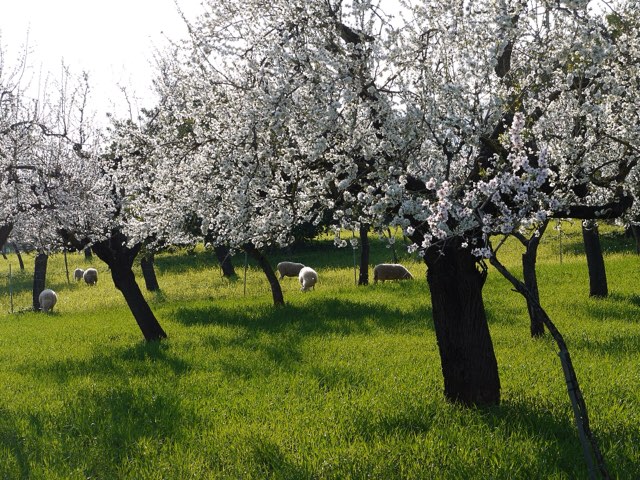
Best time to visit
Mallorca works in every month of the year, but not every month suits every plan. The climate normals published for Palma by AEMET, the Spanish state w
Open →